Long Leg Cast vs Short Leg Cast: LLC, SLC, DLLC and Arm Casts Explained
LLC, SLC, DLLC, LAC, SAC — cast abbreviations are everywhere online and rarely explained. Here is a plain-language reference of the main orthopaedic cast types, what each one immobilises, and how they differ in daily life and in photos.
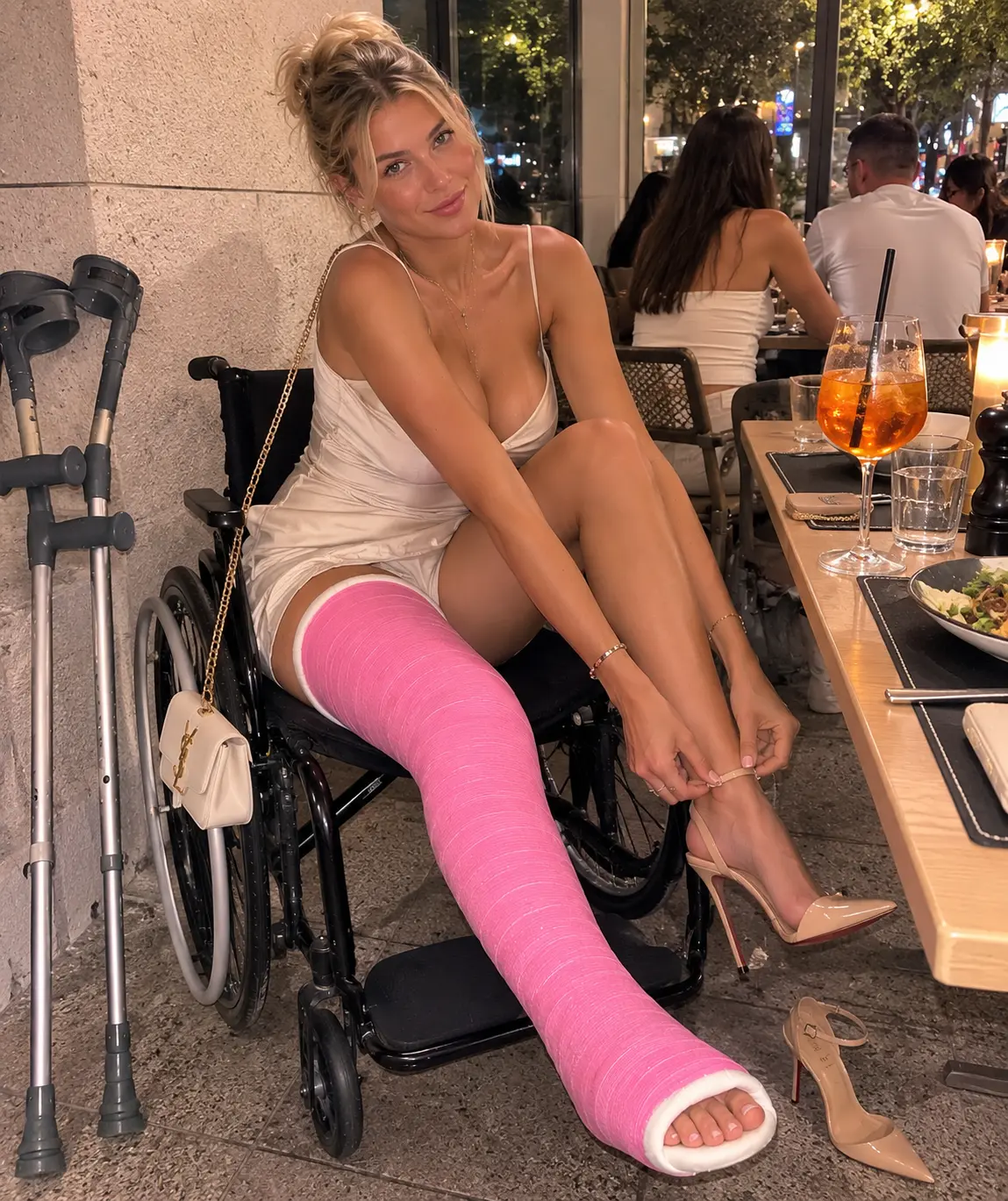
Long leg cast (LLC)
A long leg cast runs from the upper thigh down to the toes, with the knee usually held in slight flexion and the toes left exposed. It is used for femur, knee and complex tibia injuries where the knee must be immobilised.
In daily life, an LLC means non-weight-bearing mobility with crutches or a wheelchair, difficulty sitting in normal chairs, and adapted clothing. Visually it is the most recognisable cast — it is also the most photographed one.
Short leg cast (SLC)
A short leg cast stops just below the knee and covers the ankle and foot. It is the standard for ankle fractures and severe sprains. The knee stays free, so mobility with crutches is far easier than with an LLC.
For photos, an SLC works well with shorts and cropped trousers: the knee remains visible, so the cast reads as an accessory rather than the whole outfit.
Double long leg cast (DLLC)
A DLLC means both legs are in long leg casts at once, typically after bilateral fractures or major orthopaedic surgery. A wheelchair is almost always required, and transfers need help.
In photography terms, DLLC scenes are symmetrical: both legs extended, wheelchair in frame, best captured from the front three-quarter angle.
Long arm cast (LAC) and short arm cast (SAC)
A long arm cast immobilises from the upper arm to the hand, elbow bent at roughly 90°, and is used for elbow and forearm fractures. A short arm cast stops below the elbow and covers the wrist and part of the hand — the usual choice for wrist and scaphoid fractures.
Arm casts photograph best with the fingers visible and a sling in frame: the sling gives the composition a diagonal that draws the eye to the cast.
Plaster vs fiberglass
Traditional plaster of Paris is heavier, dries chalky white and moulds very precisely. Fiberglass is lighter, comes in colours (pink, blue, black, orange, neon green) and has the woven texture you see in most modern cast photos.
Fiberglass is now the default in most clinics, which is why coloured casts have become such a strong visual trend online.
Recreating any cast type with AI
Castlife Studio lets you generate photos with any of these cast types without wearing one. Select LLC, SLC, DLLC, LAC or SAC, pick plaster or coloured fiberglass, then choose a scene — indoor, outdoor, clinic or lifestyle. A DLLC selection automatically adds a wheelchair for anatomical consistency.
FAQ
What does LLC stand for?
LLC means long leg cast: a cast running from the upper thigh to the toes, immobilising the knee and ankle.
What is the difference between LLC and SLC?
An LLC includes the knee and reaches the thigh; an SLC stops below the knee and only immobilises the ankle and foot.
Why do DLLC photos always show a wheelchair?
With both legs in long leg casts, walking is impossible, so a wheelchair is the realistic mobility aid — Castlife Studio adds one automatically to DLLC scenes.
See every cast type in HD
Generate LLC, SLC, DLLC, LAC or SAC photos in the scene of your choice.